Updated September 2026
Making a living room feel cozy sounds simple enough—add a throw blanket, arrange a few pillows and light a candle. I used to think that was all it took too.
My living room had furniture and decor, but it could still feel flat and a little cold, especially during our long, grey British Columbia winters. I eventually realized that coziness doesn’t come from one purchase or from filling every empty surface. It comes from several layers working together.
Would I love to redo my living room completely? Absolutely. I could make a fairly long list that also includes my kitchen, powder room, ensuite and especially our primary bedroom. But really, who has thousands of dollars to redo every room these days? Not me.
For the past few years, I’ve mostly looked for alternatives that work for us and still feel stylish, comfortable and practical. Sometimes that means buying one thing that makes a difference. More often, it means moving furniture, changing the lighting or restyling pieces I already own.
If your living room looks reasonably finished but still doesn’t feel as comfortable as you want it to, these are the changes that helped mine—without replacing everything or pretending I had an unlimited decorating budget.
What makes a living room feel cozy? A cozy living room combines comfortable seating, warm layered lighting, a properly sized rug, soft texture, natural materials and personal pieces. You don’t need to redo the entire room. Start with the layer that feels most noticeably missing.
Disclosure: This post contains affiliate links. As an Amazon Associate, I earn from qualifying purchases at no additional cost to you.
Why Your Living Room Still Doesn’t Feel Cozy
Have you ever looked around your living room and wondered why it doesn’t feel as cozy as all those rooms you keep saving? I have.
Everything can technically be there—the sofa, rug, coffee table, pillows and decor—but somehow the room still feels a little flat. Mine has definitely felt that way, especially when the daylight disappears early and the grey walls suddenly look even greyer.
For a while, I assumed the answer was more decor. Another pillow, another basket, another candle—apparently those are my solutions to almost everything. But adding more stuff didn’t necessarily make the room feel better. Sometimes it just gave me more things to move around.
A living room can feel unfinished for some surprisingly simple reasons:
- The overhead light is doing all the work.
- The rug is too small for the furniture.
- Everything is grey, white or beige without enough contrast.
- There are plenty of accessories but not much texture.
- Small decor is scattered everywhere instead of grouped together.
- The room looks nice during the day but loses all its warmth after sunset.
- Nothing in the room feels especially personal.
The funny thing is, I still love neutral rooms. I don’t think beige or grey is automatically boring, and I’m certainly not about to fill my living room with bright colours just to make it interesting. I’ve simply learned that neutral rooms need warm wood, layered lighting, texture and a few darker accents to keep them from feeling flat.
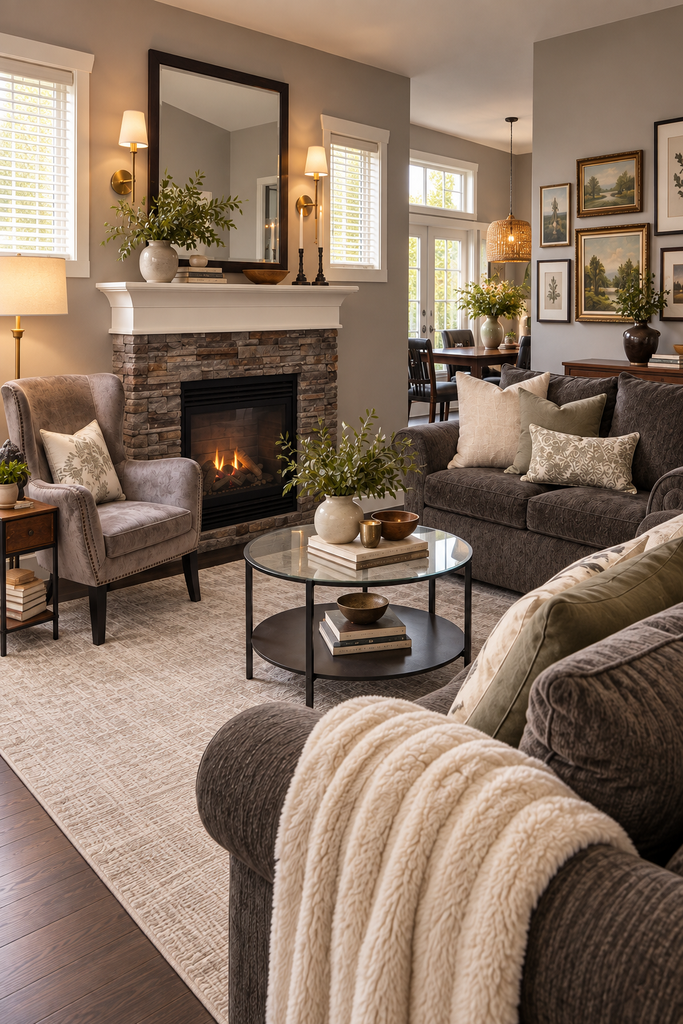
The Cozy Living Room Formula I Use
Comfortable seating + a properly sized rug + warm lighting + soft texture + natural materials + something personal
You don’t have to tackle all of it at once. Start with the part that feels most noticeably wrong. Sometimes moving a lamp, changing the rug or bringing in one warm wood piece makes a bigger difference than buying another cart full of accessories.
[PLACE APPROVED PINTEREST-DIMENSION LIVING ROOM IMAGE HERE]
Caption: A cozy living room comes together through layers—comfortable seating, warm lighting, soft textures, natural materials and personal details.
What Actually Made My Living Room Feel Cozier
This isn’t a professionally designed room, and I’m not going to pretend it is. It’s our living room. We use it every day, the coffee table is probably too small and there are things I would change if money and convenience didn’t matter.
But the room feels warmer and more pulled together than it once did. These are the changes that made the biggest difference for me.
1. I Used the Natural Light We Already Had
Our living room has a lot of windows, which is one of my favourite things about it. Too much natural light is never enough for me.
I added a large mirror above the fireplace mantel to reflect that light back into the room. It also gives the fireplace more presence and helps break up the dark grey walls. A mirror won’t physically make a window larger, of course, but placing one where it can catch natural light can make the whole room feel brighter and more open.
If your living room feels dark, look at what the mirror will reflect before hanging it. Ideally, it should bounce light or reflect something attractive—not a television, cluttered counter or awkward doorway.
Learning how much natural and artificial light could change my grey walls became a bit of a decorating lesson for me. I shared the full story in I Thought Grey Walls Were the Perfect Choice… Until Winter Arrived—including why repainting wasn’t necessarily the answer.
2. I Layered the Lighting Without Hiring an Electrician
Lighting made one of the biggest differences in our living room, particularly at night. One overhead fixture can light a room, but it rarely makes it feel inviting.
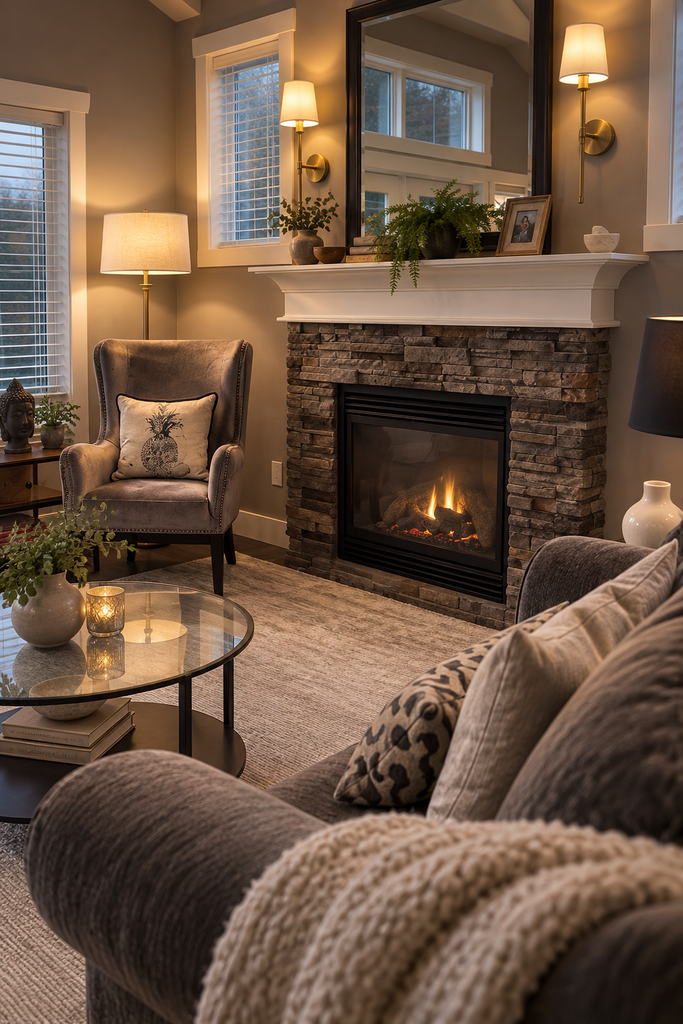
I added two brass wireless sconces beside the mirror. I loved the look of sconces, but I didn’t want to hire an electrician or open the walls. Wireless sconces gave me the style and softer light I wanted while saving time and money.
A floor lamp behind the wingback chair adds another layer and makes that corner more useful for reading. Table lamps help too, especially when they are placed at different heights around the room.
For warm, comfortable evening light, I generally prefer bulbs around 2700K. Anything much cooler can make grey or white walls feel even colder. Dimmers, rechargeable lamps and smart bulbs are also practical ways to soften the room without rewiring anything.
The goal isn’t to brightly light every inch. It’s to create a few warm pools of light so the room still feels inviting after the natural light disappears.
3. I Replaced the Rug With a Larger One
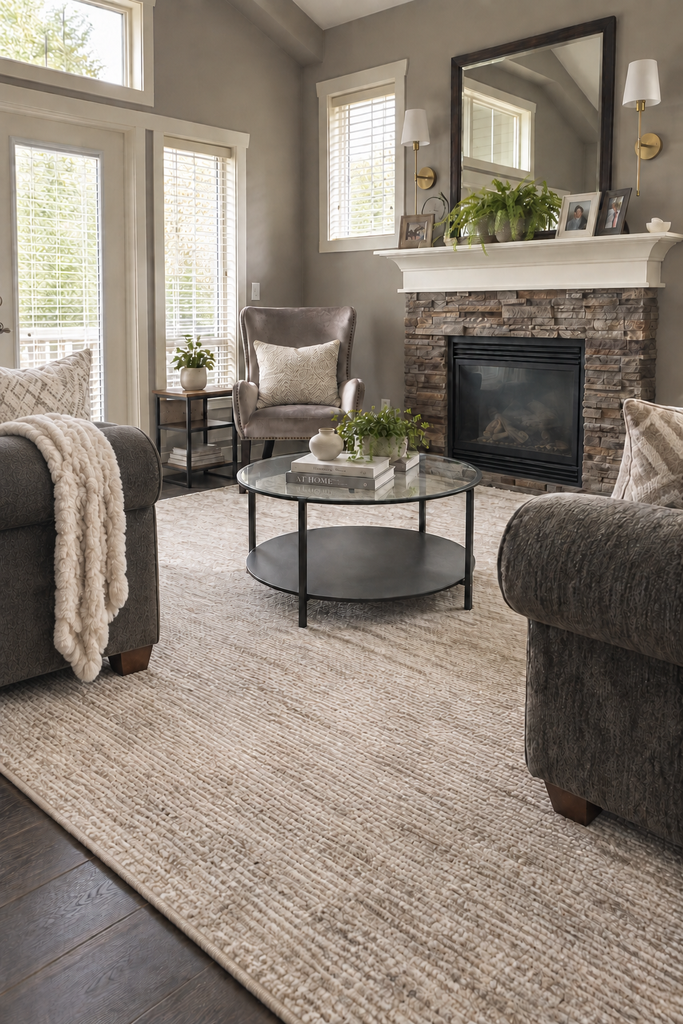
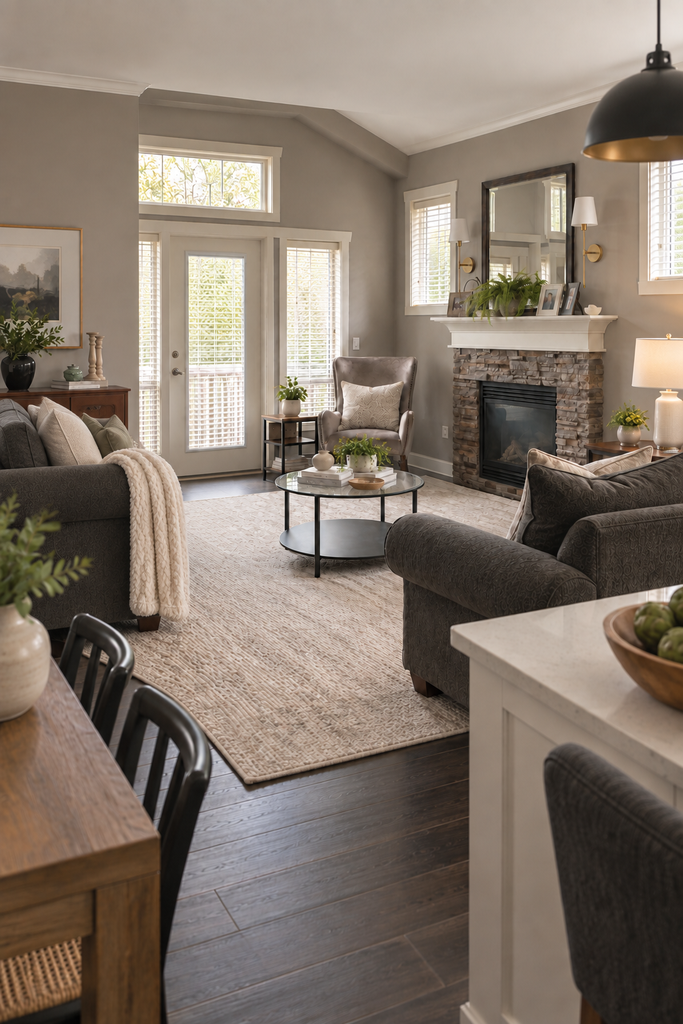
The rug under our sofas used to feel disconnected from the furniture. Changing it for a larger beige and cream rug helped ground the seating area and made the room feel more intentional.
This is one of those decorating suggestions I heard repeatedly before I fully understood why it mattered. A rug that floats in the middle of the floor can make every piece of furniture look separate. When at least the front legs of the sofa, loveseat and chairs sit on the rug, the whole arrangement feels connected.
A larger rug can be an investment, so I don’t believe in replacing one simply because a designer says it is an inch too small. But if your room feels chopped up or the coffee table appears to be sitting on a little island, rug size may be the reason.
In a neutral living room, a subtle pattern is useful because it adds interest without taking over. Beige, cream and muted grey work in our room while still allowing me to change pillows and accessories whenever the urge strikes—which happens fairly often.
If you suspect your rug may be making the room feel smaller or disconnected, my living room rug size and placement guide explains how to choose the right size and position it around a sofa, loveseat or chairs.
4. I Stopped Trying to Fix the Sofa With More Pillows
I love pillows, so this is advice I have to remind myself to follow.
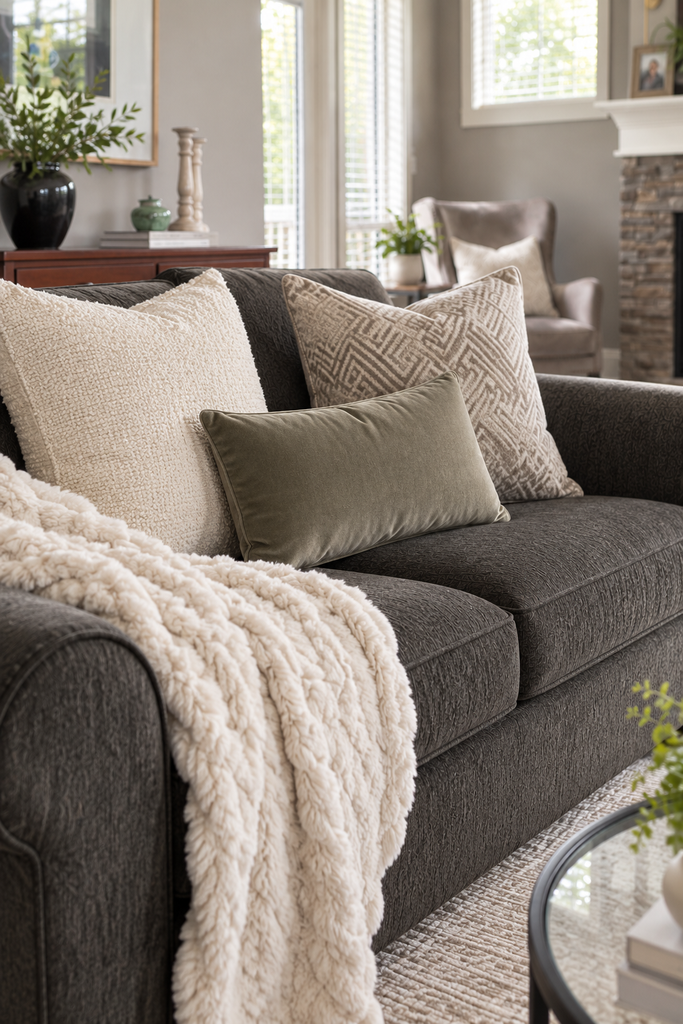
My first instinct is often to add another one, but too many small pillows can make a sofa look busy and leave nowhere comfortable to sit. A few larger pillows usually look more generous and feel less cluttered.
I like mixing cream, taupe, muted olive and soft patterns against our dark grey sofa and loveseat. The lighter colours soften the upholstery, while different fabrics keep the neutral palette from looking flat.
Pillow covers are also one of the easiest affordable changes. They take up less storage than full pillows, and I can switch them seasonally without feeling as though I’m buying an entirely new living room.
The same applies to throws. One soft furry or textured blanket draped neatly over an arm adds warmth. Covering the entire sofa in blankets may be comfortable—and I have certainly done it—but it doesn’t always photograph or live quite as beautifully.
A Few Cozy Fall Pieces I’m Loving
If you’re in the mood to add a little seasonal warmth, I’ve gathered some of my favourite fall decor finds in one place. Think soft throws, neutral pillow covers, warm lighting and natural textures—simple pieces that make a room feel cozier without covering it in pumpkins.
5. I Added Warm Wood to Balance the Grey
Our living room has grey walls, grey seating and darker flooring. I still like grey, but I’ve learned that it needs something warmer beside it.
Wood decor, picture frames, bowls, small tables and even a stack of books help take the cool edge off. You don’t need every wood tone to match. In fact, a collected mix often looks more natural than buying an entire matching set.
I also like pairing wood with pottery, greenery and a little aged brass. Those materials add warmth and texture without requiring bright colour. They work particularly well in a neutral living room because they make it feel layered rather than overly coordinated.
If your room feels cold, try adding one warm wood element before repainting everything. A small stool, picture frame, lamp base or thrifted bowl may be enough to change the balance.
6. I’m Making Room for a Piece That Means Something
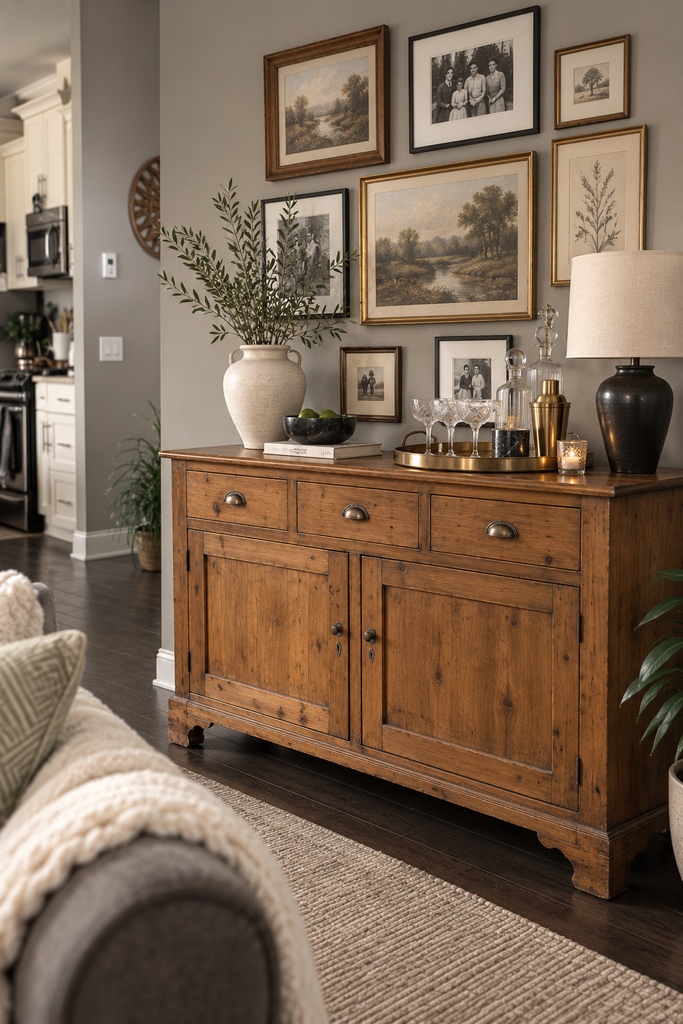
One piece I still want to bring upstairs is the old pine buffet that belonged to my parents. It was part of the first furniture set they bought after we moved to Chilliwack when I was seven, so it has been around for most of my life.
It has the scratches and scuffs you would expect after years of family celebrations, and it has already been reinvented more than once. The upper shelving is long gone, and the bottom cabinet has been a buffet, a television console, my son’s dresser and storage for dishes. Right now it is in the basement holding blankets and all those odds and ends that never seem to have a proper home.
I could replace it with something new, but I don’t want to. I would rather give it another chapter.
I haven’t completely decided what the makeover will look like yet. I may remove the layers of paint, change the hardware or paint it again—but I know I want it to feel vintage, not farmhouse or country. Eventually, I can see it upstairs holding cocktail glasses and serving dishes with a gallery wall above it.
That is the kind of decorating I find most rewarding. A cozy room isn’t only about adding the right rug or lamp. It is also about keeping the pieces that mean something and finding a way for them to work with the home you have now.
I shared more of its story in The Piece of Furniture I Couldn’t Let Go Of. It is a good reminder that sometimes an old piece isn’t waiting to be replaced. It is simply waiting for us to see it differently.
7. I Use the Walls to Add Personality
A blank wall can make a furnished room feel strangely unfinished. One small picture can have the same effect if it doesn’t have enough visual weight for the space.
That doesn’t mean you need to buy one enormous piece of expensive art. A gallery wall can be built slowly using prints, family photographs, vintage landscapes and frames you already own. I like a collected look with a mix of warm wood, thin black and aged brass frames rather than a perfectly matching set.
The easiest way to make a gallery wall feel intentional is to repeat something—similar colours, frame finishes or subject matter—and leave fairly consistent spacing between the pieces.
Most importantly, hang things you actually enjoy looking at. A home feels cozier when it tells people something about who lives there. Generic art can fill a wall, but photographs, travel memories, inherited pieces or something you found unexpectedly will usually make it feel more personal. I plan to frame several of my uncles paintings I inherited after he passed.
How I imagine my parents’ old pine buffet after its next makeover—useful again, thoughtfully styled and surrounded by pieces that feel personal.
8. I Kept the Coffee Table That Isn’t Technically Perfect
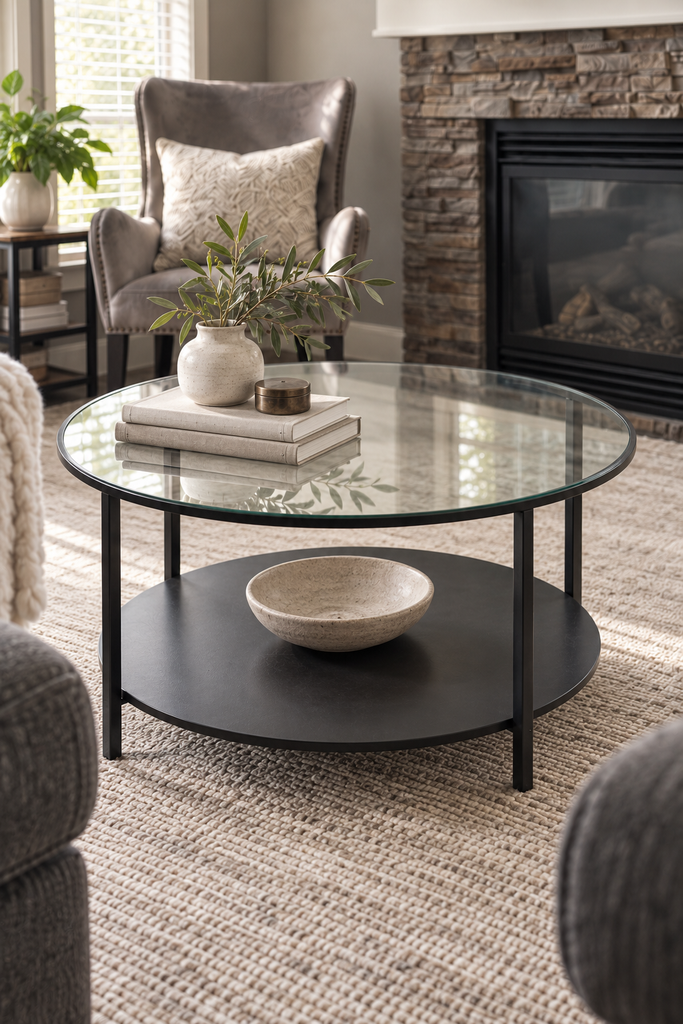
I have often thought about replacing our round IKEA coffee table. It’s probably too small for the room, and I’ve considered asking Jason to build me something with more presence.
Then I style it differently, move a few things around and somehow decide it works again.
The round shape is practical because we can easily walk around it, and the glass keeps the room from feeling heavier. That matters in a space that already has dark furniture. It may not be the coffee table I would choose if I were starting from scratch, but we aren’t starting from scratch—and it still works for us.
When I restyle it, I keep the arrangement fairly simple: a couple of books, a pottery vase or greenery, and one smaller object or candle. Varying the heights makes it look layered, while leaving open space keeps the table usable.
This is a good reminder that a piece doesn’t have to be perfect to deserve a place in your home. Sometimes it just needs to be seen differently.
9. I Make Small Changes to Side Tables and the Mantel
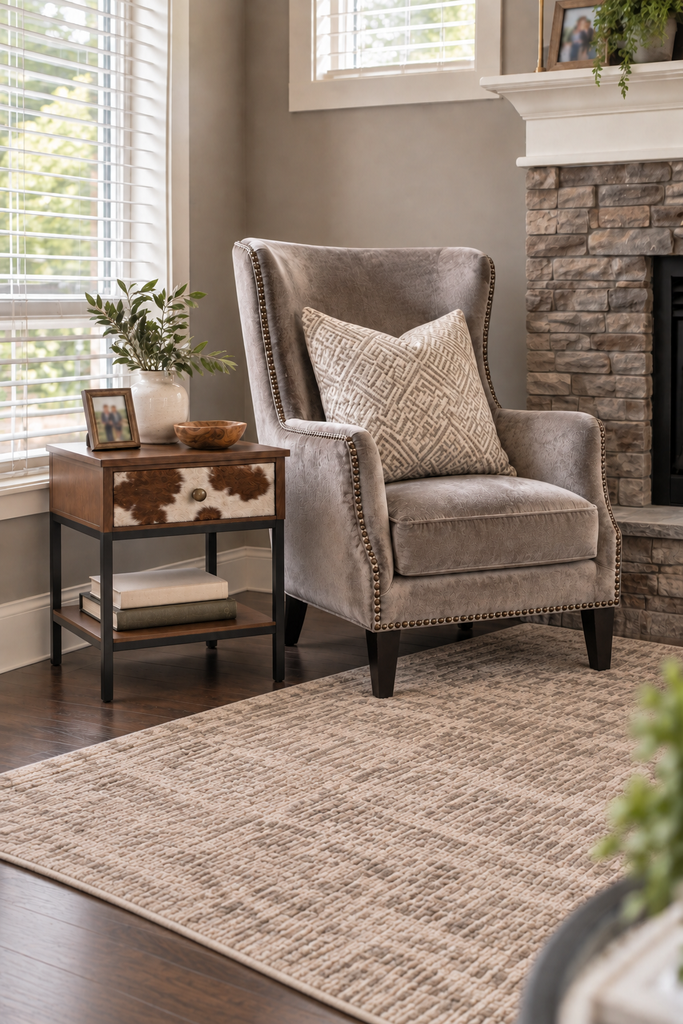
When I feel the urge to redecorate, I usually start with one small surface. Side tables, the coffee table and fireplace mantel are easy to change without moving heavy furniture or spending much money.
Swapping one decor piece on a side table can change the whole corner. A different lamp, wood object, framed photograph or small vase may be all it needs.
The mantel works best when I resist filling every inch. The large mirror is already the main feature, so a few pieces with different heights are enough—perhaps a stack of books, pottery, greenery and a wood or brass accent. Leaving some empty space allows the stone fireplace and mirror to stand out.
This is also where shopping your own home works particularly well. A vase from the bedroom, books from another table or a lamp that has been sitting unused can feel surprisingly new in a different room.
10. I Move Things From Room to Room—Constantly
I can’t tell you how often I have moved a piece of decor from one room to another. It feeds my decorating urge and doesn’t cost anything.
Sometimes an item that feels tired in one spot looks completely different somewhere else. A lamp can move from a bedroom to the living room. A small table can become a plant stand. A vase can leave the kitchen and end up on the mantel.
Before buying something new, I now try to walk around the house and see whether I already own something that could solve the problem. It doesn’t always stop me from shopping, but it has saved me from plenty of unnecessary purchases.
Moving things around also helps me understand what the room actually needs. If every arrangement still feels wrong, then I can make a more thoughtful purchase instead of buying something simply because I’m bored with the room.
11. I Choose Practical Over Perfect
Our living room has to work for us, not just look good in a photograph.
The sofa and loveseat are comfortable. The coffee table leaves room to walk around. The rug grounds the furniture. The wireless sconces give me the look I wanted without electrical work. None of those decisions is especially dramatic, but together they make the room feel better.
Stylish and practical do not have to be opposites. In my opinion, the most successful rooms are comfortable enough to use every day and attractive enough to make you happy when you walk into them.
Where I Would Spend—and Where I Would Save
If the budget is limited, I would spend first on the pieces that affect the entire room: a properly sized rug, comfortable seating and lighting you will use every day. Those choices influence how the room feels more than a collection of small accessories.
I would save on the things that are easy to change:
- Pillow covers instead of completely new pillows
- Secondhand frames and mirrors
- Thrifted pottery, bowls and wood decor
- Wireless or rechargeable lighting when electrical work isn’t necessary
- Prints mixed with personal photographs instead of expensive original art
- Decor moved from another room
- A coffee table you can restyle instead of immediately replacing
Affordable doesn’t have to mean temporary or unattractive. The goal is to choose pieces that solve a real problem and work with what you already own.
Working with what I already own has become a much bigger part of how I decorate. In How to Decorate Your Home on a Budget Without Making It Look Cheap, I share more of the smaller changes that can make a home feel thoughtful and collected without spending a fortune.
What I Would Skip in a Cozy Living Room
I don’t think every popular cozy decorating idea belongs in every home.
A blanket ladder, for example, can be useful, but it leans more farmhouse than my current style. I would rather drape one blanket over the sofa or store extras somewhere less visible.
I would also skip buying dozens of small seasonal decorations. A few branches, pillows or warm-toned accents can change the mood without covering every surface in themed decor.
And although candles are lovely, you don’t need them everywhere. Lamps, sconces and flameless candles can create the same evening warmth with less worry.
Cozy doesn’t mean crowded. It should feel warm, comfortable and personal—not as though every decorating trend arrived at once.
A Cozy Home Doesn’t Require a Complete Redo
I would still love to redo several rooms in our home. I’m always going to notice something I could change, move or improve because that’s part of why I enjoy decorating.
But really, most of us don’t have thousands of dollars available every time a room starts to feel tired. Sometimes the better answer is to work with what we already own, solve the most noticeable problem and make one thoughtful change at a time.
That is also one of the reasons I started Sharmed Life. I’m not an interior designer, and I’m certainly not pretending to have a perfect home. I simply love decorating, experimenting with different arrangements and finding stylish, practical solutions that make everyday rooms feel better.
If something I’ve tried helps you see your own living room differently—or gives you one beautiful idea you hadn’t considered—that is incredibly rewarding to me.
Start with the lighting. Try a larger rug. Move a table. Restyle the coffee table you’ve nearly replaced five times. Shop another room before shopping online.
Your living room doesn’t need to be completely new to feel cozy. It just needs to feel comfortable, useful and a little more like you.
You Might Also Like
If you’re making your living room cozier one thoughtful change at a time, these articles may help with some of the decisions that can make the biggest difference.
I Thought Grey Walls Were the Perfect Choice… Until Winter Arrived
See how changing seasons and natural light affected my grey walls—and why repainting wasn’t the solution I expected.
What Size Rug Do I Need? A Simple Living Room Rug Size and Placement Guide
Not sure whether your rug is large enough? This practical guide explains how to choose and position a rug so your living room feels properly connected.
How to Decorate Your Home on a Budget Without Making It Look Cheap
More realistic ways to create a stylish, collected home using affordable pieces, thoughtful purchases and things you may already own.
Leave a Reply