I get compliments on my gravy, but my stuffing is usually the thing everyone wants seconds of—or tries to take home. If I allow it. There are limits to my generosity. 😂
I love putting together a beautiful Christmas dinner table, but once everyone sits down, the food takes over. And nothing creates a small holiday crisis quite like running out of gravy.
My homemade turkey gravy starts with roasted vegetables and drippings from the bird. Then come a little chicken bouillon, seasonings, and a flour-and-water slurry. I stir, taste, and adjust until I’m happy.
I’m not a chef, and this isn’t an exact-measurements recipe. It’s simply how I make turkey gravy—and judging by the requests for seconds, it seems to work.
1. Start the Flavour Underneath the Turkey
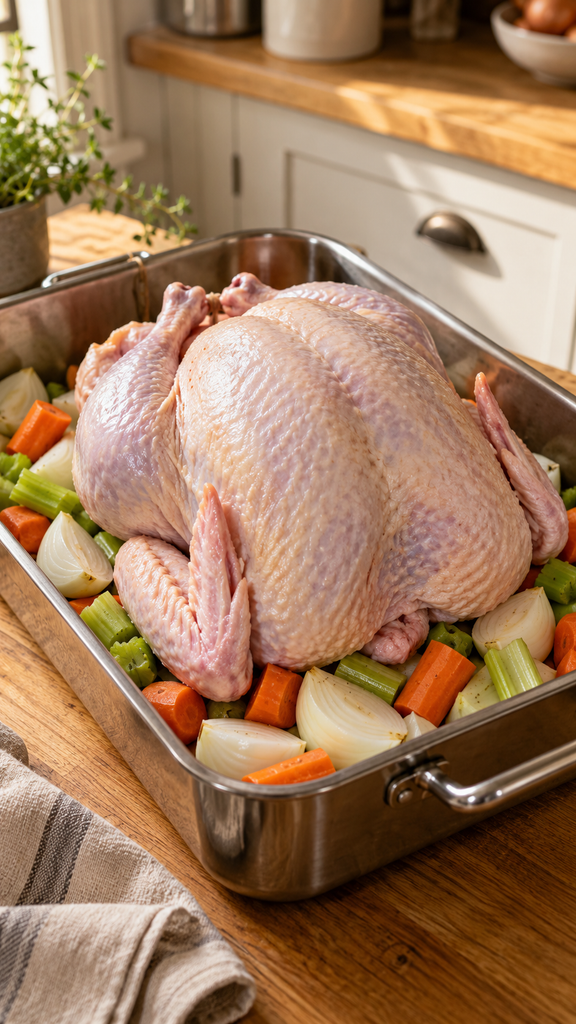
Before the turkey goes into the oven, I put large pieces of onion, carrot, and celery in the roasting pan underneath it.
They add flavour to the juices and help lift the bird off the bottom of the pan. I’ve used a roasting rack before, but I find it gets in the way. And it’s not so fun to clean at the end of the night. The vegetables earn their place because I use them in the gravy afterwards.
They aren’t just there to make the roasting pan look productive.
2. Keep Those Turkey Drippings
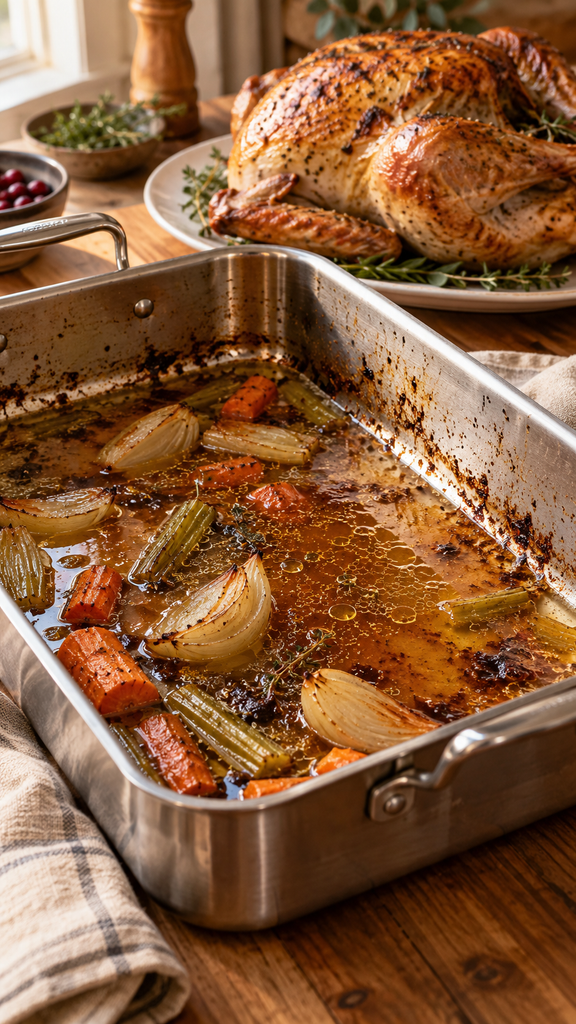
Once the turkey is cooked, I move it to a platter to rest and keep the juices and vegetables in the roasting pan.
That’s the beginning of my gravy. There’s already flavour in there, so I want to make the most of it.
I use the browned bits, but avoid anything genuinely burned or blackened. Rich and roasted is lovely. Burned is a different flavour altogether.
3. Skim Off Some Fat If There’s Too Much
I look at the drippings before deciding how much fat to remove.
If there’s a thick layer floating on top, I skim some off with a spoon. I don’t try to remove every trace, but I don’t want a gravy boat full of grease either.
This is one of those little adjustments I make by looking at what’s in the pan rather than following a fixed amount.
4. Blend the Roasted Vegetables Into the Juices
This is a big part of my method: I blend the cooked onions, carrots, and celery into the turkey juices with a hand blender.
The vegetables help give the gravy body, along with all that flavour from cooking underneath the bird.
Be careful here—hot drippings can splatter. I take the pan off the heat, make sure it’s stable, and keep the blender head submerged before switching it on. If the liquid is too shallow to blend safely, transfer everything carefully to a suitable deep, heatproof container first.
Blend until the vegetables are smooth. Switch the blender off before lifting it out. Nobody needs a gravy-related injury before dinner.
5. Add the Juices From the Resting Turkey
As the turkey rests, more juices collect on the platter. Those go into my gravy too.
Keep them aside as you work so they don’t accidentally get washed away during the kitchen cleanup.
They’re useful flavour, and I’m not wasting them after spending all that time cooking the turkey.
6. Add Chicken Bouillon, Then Taste Before Salting
I use chicken bouillon to give the gravy a little extra savoury flavour.
I start with a small amount and taste as I go, because the drippings may already be salty—especially if the turkey was brined or seasoned generously.
Then I add pepper, any other seasonings I’m using, and salt only if it needs it.
You can always add more seasoning. Taking it back out is considerably more annoying.
If I need more liquid, I add water or stock a little at a time, keeping the saltiness in mind.
7. Mix the Flour and Water Before Adding It
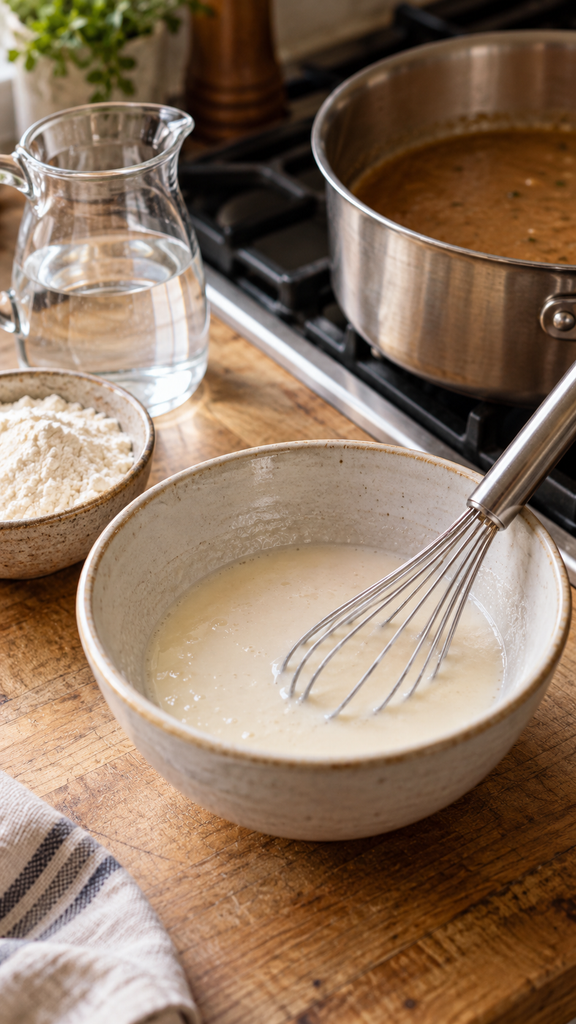
To thicken my gravy, I make a slurry with plain flour and cold water.
I mix them in a separate cup or bowl until smooth and pourable, with no dry pockets of flour. Then I gradually stir some into the hot gravy while whisking.
Don’t tip dry flour straight into the pan. Mixing it with cold water first makes it much easier to incorporate smoothly.
I add a little slurry at a time. I’m making gravy, not something that needs to be sliced.
8. Let It Simmer Before Adding More Thickener
Once the slurry is in, I bring the gravy to a gentle simmer and keep stirring, reaching into the corners of the pan so nothing catches.
The flour needs time to cook and thicken the liquid. I give it several minutes before deciding whether it needs more slurry.
If it becomes too thick, I loosen it with a little water or stock. If it’s too thin, I add a little more freshly mixed slurry and let it simmer again.
I’m looking for gravy that pours nicely and coats the turkey and potatoes without disappearing underneath everything.
9. Keep Tasting Until You’re Happy
I taste the gravy with a clean spoon and adjust it until it has the flavour and consistency I want.
Sometimes it needs more pepper. Sometimes a little more bouillon. Sometimes it just needs a splash of liquid and a few more minutes.
A quick check before serving helps:
Too thick? Stir in a little water or stock.
Too thin? Add a little more slurry and simmer.
Too salty? Add unsalted liquid, then adjust the thickness again.
Lumpy? Try whisking or passing it through a fine-mesh sieve.
Use small additions and taste again. One enthusiastic shake of seasoning can create a whole new problem.

10. Keep a Gravy Packet in the Cupboard. Yes, Really.
Here’s a secret I don’t tell very often: I have used a grocery-store gravy packet when there weren’t enough turkey drippings.
Yep. I said it.
Not often, but I keep one on hand because you just never know. Prepare it according to the packet instructions, then add as much as you need to extend the homemade gravy. Taste before adding any more bouillon or salt.
I’m not interested in winning a prize for making dinner more difficult. I’m interested in everyone having enough gravy.
Running out halfway through the first serving is bad enough. Running out when someone wants seconds? Absolutely not.
A backup gravy packet is one small way to make the holiday easier on yourself. For the earlier, quieter part of the day, I’ve also shared my cozy Christmas morning ideas. A little breathing room before the roasting pans come out sounds lovely to me.
Amazon Holiday Finds You’ll Actually Use
A beautiful gravy boat is lovely, but I also appreciate the practical things—serving dishes that hold enough for everyone, kitchen tools that make dinner easier, and a few festive touches for the table.
Browse my Amazon Holiday Finds You’ll Actually Use for inspiration for your kitchen and holiday table. Start with what you already have. We’re making room for gravy, not another cupboard full of things we never use. 😂
As an Amazon Associate, I earn from qualifying purchases.
Storing and Reheating Leftover Gravy
If there’s gravy left, transfer it into shallow containers and refrigerate it promptly—within two hours. Don’t leave the roasting pan sitting out while everyone settles into the sofa.
For a conservative storage guideline, use refrigerated leftovers within two to three days, or freeze them for later.
When reheating, bring the gravy to a full rolling boil while stirring. Add a little water or stock if it has thickened in the fridge, and reheat only the amount you need.
My Final Gravy Rule: Make Enough
For me, good turkey gravy starts with the flavour already in the roasting pan. The vegetables, drippings, and resting juices do a lot of the work. After that, it’s stirring, tasting, and making small adjustments.
It doesn’t need to be fancy. And if a backup gravy packet helps get dinner on the table with enough for everyone, I’m perfectly comfortable with that.
Just don’t assume the leftover stuffing is included in your takeaway package. We’ll discuss that separately.
Once dinner is under control, I can get back to the part I also love: making the house feel festive. If warm lighting, greenery, and classic plaid are your thing, take a look at my Ralph Lauren-inspired Christmas decorating ideas on a budget.
You Might Also Like to Read
Christmas Table Decor Ideas — Candlelight, meaningful family pieces, and a little something unexpected
Cozy Christmas Morning Ideas — Simple ways to enjoy a slower start before the holiday gets busy.The Ralph Lauren Christmas Look on a Budget — Bring in classic greenery, warm textures, and festive touches without a designer budget.
Leave a Reply