I love Christmas ornaments in rich browns, soft creams and muted greens, especially when there’s a little texture involved. What I don’t love is the idea of buying an entirely new collection every time I want to change the look of my tree. A few simple baubles, some paint and a beautiful ribbon can give you plenty to work with.
These four DIY Christmas ornament ideas include velvet-look baubles, clear ornaments filled with dried florals, neutral painted ornaments and a textured finish inspired by pottery. You can make a small matching set or mix the finishes together for a tree that feels collected rather than bought all at once.
If you’re new to ornament decorating, I’d start with the dried-floral version. It doesn’t involve painting or waiting for several coats to dry. The painted and textured ornaments take a little more patience, but the steps below break each project into manageable stages.
My advice? Try one ornament before committing to twelve. It’s much easier to adjust a colour or finish on a single bauble than to discover halfway through the batch that your lovely taupe looks suspiciously purple.
For more ways to refresh your home without replacing everything, take a look at how to decorate your home on a budget without making it look cheap.
This post contains affiliate links. If you buy through them, I may earn a commission at no extra cost to you. As an Amazon Associate, I earn from qualifying purchases.
If using generated illustrations, a natural caption is: “Decorating inspiration; your finished ornaments will vary with the materials and colours you choose.” Use actual project photographs for step-by-step results whenever available.
Before You Start: Supplies and a Simple Drying Setup
You don’t need supplies for every project. Choose your favourite finish first, then gather what that version needs. Check your craft drawer before buying anything new.
Useful basics:
- Plain plastic craft baubles with removable caps; for the floral project, choose clear baubles with openings wide enough for your stems.
- Acrylic craft paint suitable for the ornament material, in colours such as cream, taupe, chocolate brown or muted green.
- A small paintbrush and a foam brush or makeup-style sponge reserved for crafts.
- Ribbon or ornament hanging cord.
- A protected work surface and a shallow tray.
- A stable box and blunt dowels that fit loosely inside the ornament openings, if you’re making a drying stand.
Project-specific extras:
- Velvet-look ornaments: craft flocking fibres and the adhesive recommended for those fibres.
- Floral ornaments: completely dried flower pieces or small faux floral sprigs, scissors and tweezers.
- Painted ornaments: optional water-based metallic craft paint for the caps or subtle highlights.
- Textured ornaments: baking soda, flour and a small mixing container.
Wash away dust or residue with mild soapy water if the ornament manufacturer allows it, then let the baubles dry completely. Follow the paint label for any primer or surface preparation it requires. If you’re reusing shiny ornaments, test a small area first; some finishes won’t hold paint well without additional preparation.
For a drying stand, make snug holes in a sturdy box and insert blunt dowels upright. Slip each uncapped bauble over a dowel that fits loosely inside its opening. Don’t force it. Space them far enough apart that they cannot touch, and check that the box stays steady before painting. Keep tape away from the outside surface you plan to decorate.
Drying matters: Paint can feel dry before it is ready to handle or wrap. This is a good time for coffee—not a good time to check the wet paint with your thumb. Follow the product’s drying and curing instructions, and allow extra time between stages if the finish still feels tacky.
Plastic baubles are less fragile than glass, but the caps, loose fibres and small floral pieces still need to stay away from young children and pets. Have adults handle flocking and metallic finishing products according to their labels. For a family activity, filling clear ornaments is the simpler option with supervision.
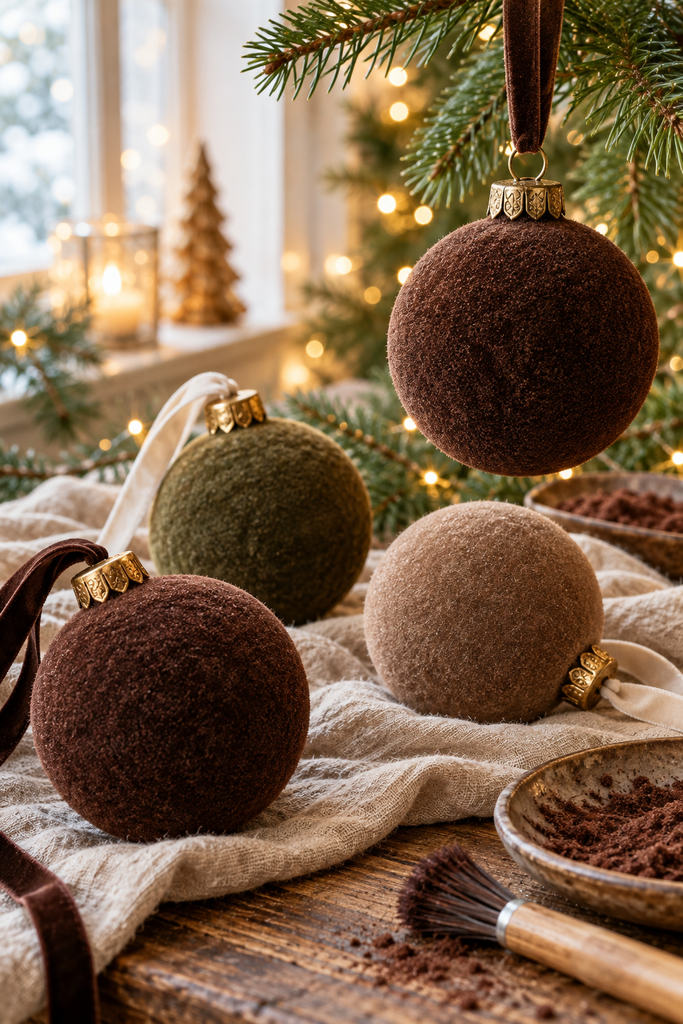
1. Velvet-Look Christmas Ornaments
These ornaments get their soft finish from craft flocking fibres rather than wrapped velvet fabric. I like the idea of chocolate brown, olive green or warm taupe paired with a simple ribbon. Matching the paint underneath to the flocking colour helps make small gaps less noticeable.
What You’ll Need
- Plastic craft baubles with removable caps.
- Suitable acrylic paint in a colour close to your flocking fibres.
- Craft flocking fibres and their recommended adhesive.
- A paintbrush, shallow tray and drying stand.
- Ribbon; optional black paint and antique gold Rub & Buff for the caps.
How to Make Them
- Remove the cap. Clean and dry the bauble, then put it on your drying stand.
- Paint the base. Choose a colour close to your flocking fibres. Apply a thin coat and let it dry. Add a second coat if needed and let that dry, too.
- Add adhesive. Brush on an even layer of the adhesive recommended for your flocking product.
- Apply the flocking. Hold the bauble over a tray and add the fibres as your kit directs. Turn it gently to cover the wet adhesive without rubbing the surface.
- Let it dry. Follow the adhesive’s drying time, then gently remove loose fibres. Touch up bare spots with a little adhesive and more flocking.
- Finish the cap. If you like, paint it black and let it dry. Add a tiny amount of antique gold Rub & Buff, following its label, and let the finish dry.
- Add ribbon. Replace the cap and thread ribbon through its hanging loop.
My tip: Matching the base paint to the flocking colour makes small gaps less obvious. Keep sealers off the flocked surface unless your kit recommends one.
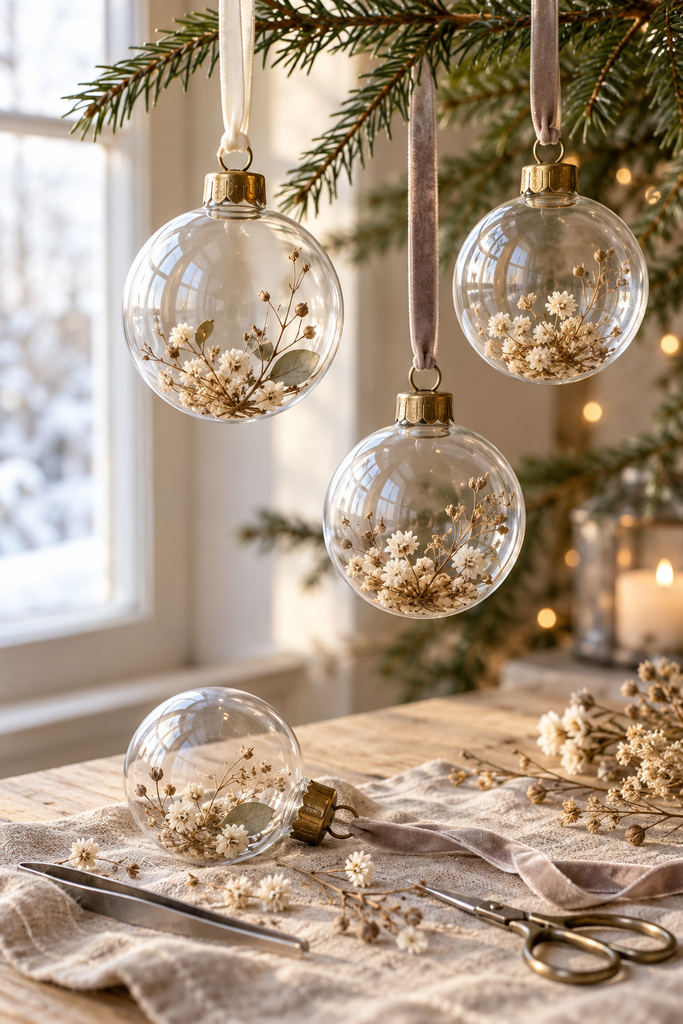
2. Clear Christmas Ornaments with Dried Florals
A clear bauble with a few delicate stems inside can look lovely beside painted or textured ornaments. I’d keep the colours quiet—cream, beige or muted green—and leave some empty space so you can see the shape of the flowers.
What You’ll Need
- Clear plastic baubles with removable caps.
- Small, completely dried flower pieces or faux floral sprigs.
- Scissors and tweezers.
- Ribbon or hanging cord.
How to Make Them
- Remove the cap. Choose small floral pieces that fit through the opening.
- Trim the stems. Cut completely dried or faux stems shorter than the inside of the bauble.
- Add a few pieces. Use tweezers to guide them inside. Don’t force large flower heads through the opening.
- Check the arrangement. Hold the bauble upright as it will hang. Loose pieces will settle, so check the effect in that position.
- Adjust the filling. Add or remove a few stems. Leave some empty space so the flowers remain visible.
- Add the hanger. Replace the cap, thread in ribbon and check that the cap grips securely.
My tip: Start with less than you think you need. We’re decorating a bauble, not squeezing an entire wedding bouquet into it.
Use completely dry materials so you don’t trap moisture inside.
These ornaments don’t have to stay on the tree. A few arranged in a shallow bowl can work with greenery and candlelight, too. For ideas on bringing those pieces together, see my Christmas table decor ideas.
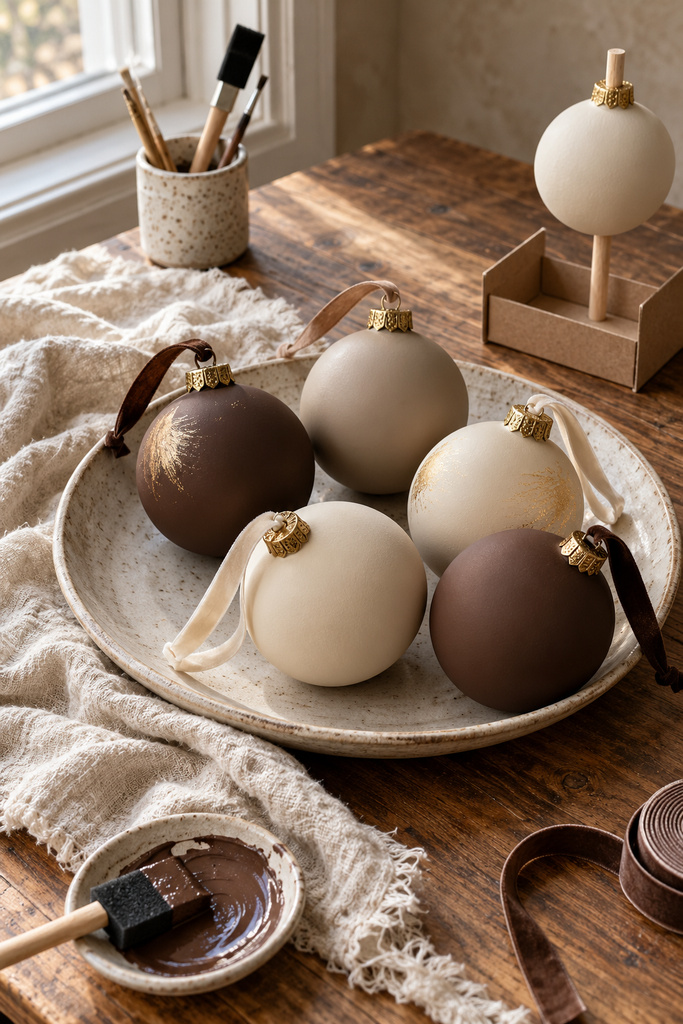
3. Neutral and Brown Painted Christmas Ornaments
Painted baubles are a simple way to bring a mismatched collection into the same colour family. I’m drawn to cream and chocolate brown, but taupe, soft grey or muted green would work beautifully, too. A small set in two or three colours can feel coordinated without making every ornament identical.
What You’ll Need
- Plastic baubles with removable caps.
- Acrylic craft paint suitable for their surface.
- A soft brush or foam brush and a drying stand.
- Optional antique gold Rub & Buff or metallic craft paint, plus a suitable applicator or sponge.
- Ribbon or hanging cord.
How to Make Them
- Pick your colours. Try cream, taupe or chocolate brown. Test one bauble first to check the dried colour.
- Remove the cap. Clean and dry the ornament, then place it on your drying stand.
- Paint a thin coat. Use a foam brush or soft brush for even coverage.
- Let it dry and repeat. Follow the paint label, then add a second coat if needed. Let that dry before adding details.
- Add optional gold highlights. Apply a tiny amount of antique gold Rub & Buff with a suitable applicator, following its label. Test a small area first. Metallic craft paint is another option.
- Finish the cap. Leave it as it is or add the same antique gold effect. Let everything dry before replacing it.
- Add your ribbon. Thread it through the cap loop and check that the cap is secure.
My tip: Go gently with the gold. A little shimmer is lovely; your bauble doesn’t need to audition for a disco ball.
If paint scratches off easily, check the paint’s preparation and curing instructions before decorating more ornaments.
If you love this soft palette beyond Christmas, my coastal neutral decor ideas show how warm wood, woven textures and quiet colours can work together throughout the home.
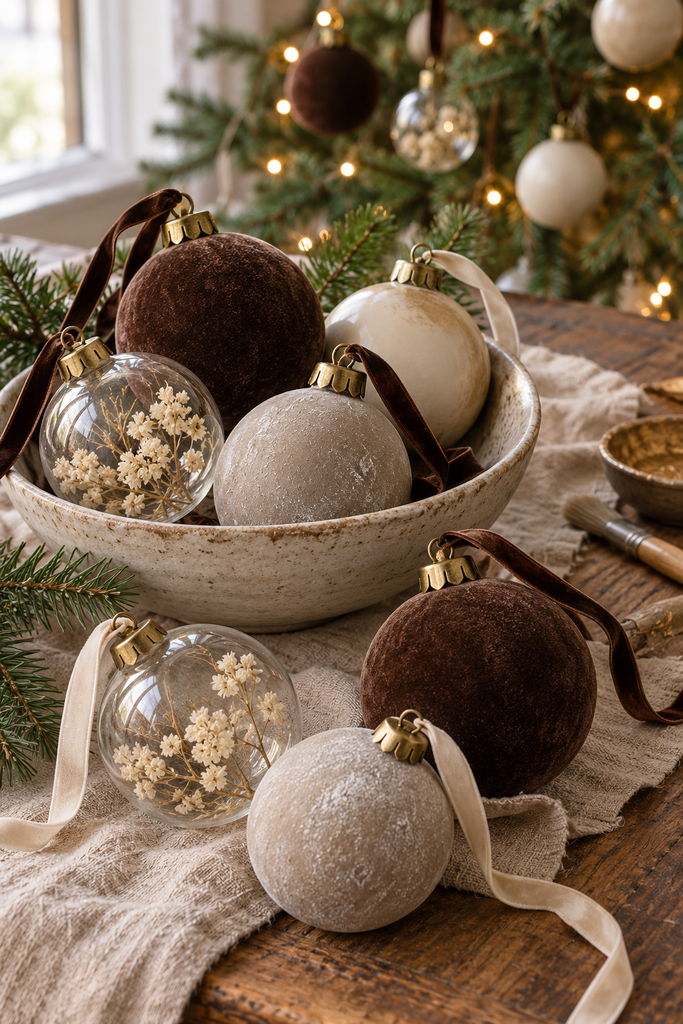
4. Textured Christmas Ornaments with Baking Soda and Flour
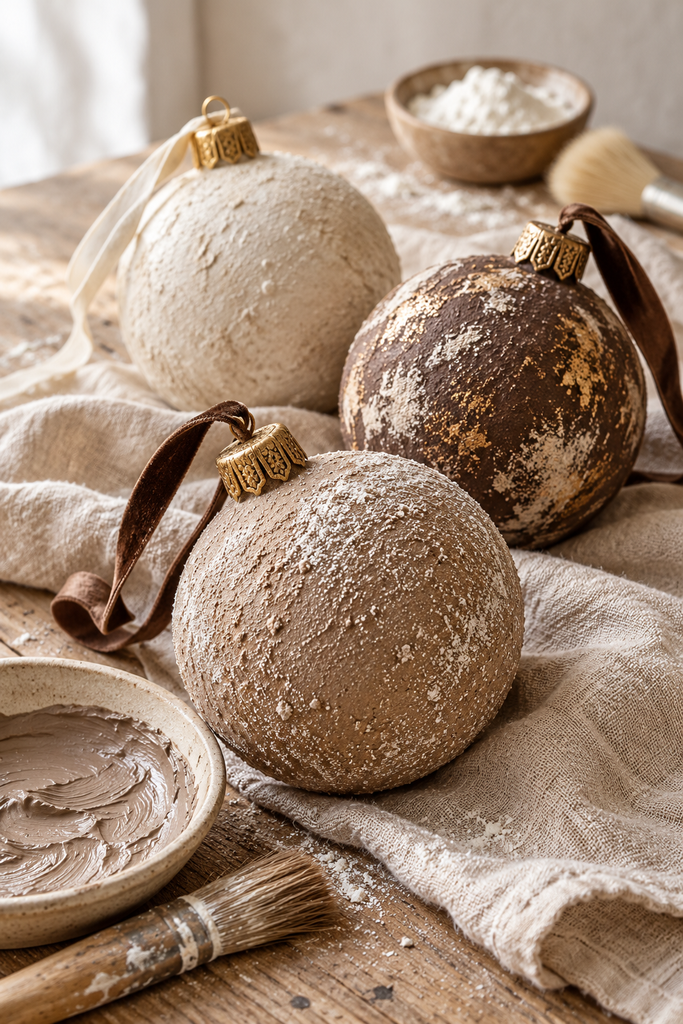
For a matte, pottery-inspired finish, you can add a little baking soda to craft paint. The aim is a lightly textured surface, not a thick crust. I’d keep this version in cream, taupe or brown and let the texture provide most of the interest.
What You’ll Need
- Plastic baubles with removable caps.
- Suitable acrylic craft paint.
- Baking soda, flour and a small mixing container.
- A regular paintbrush and drying stand.
- Lighter paint, optional gold or copper craft paint, and optional antique gold Rub & Buff.
- Ribbon or hanging cord.
How to Make Them
- Prepare the bauble. Remove the cap, clean and dry the surface, and put it on your drying stand.
- Paint the base. Apply a thin coat of your chosen colour and let it dry.
- Mix the textured paint. Stir a small pinch of baking soda into a little paint. Add more gradually until it has light texture but still brushes on easily. Test on a spare bauble first.
- Apply the mixture. Dab a light coat over the ornament with a regular paintbrush. Keep the opening clear and let the coat dry fully.
- Add lighter highlights. Put lighter paint on a sponge and wipe most of it onto scrap paper. Gently dab the raised areas, then let it dry.
- Add optional shimmer. Lightly dab on gold or copper craft paint if you like. Let that dry before continuing.
- Try the flour finish. Over a tray, lightly dust one test ornament with flour. Gently brush away the excess with a soft brush. Check the effect before repeating it on the rest of your baubles.
- Add optional Rub & Buff. For your original antiqued effect, put a tiny amount inside a disposable bag and gently dab or rub it onto a small area. Follow the product label and test first, especially over the flour finish.
- Finish the ornament. Let the finishes dry as directed, replace the cap and add ribbon.
My tip: Add baking soda gradually. If the paint becomes a thick paste, stir in a little more paint. You want a pottery-like finish, not something that escaped from the mixing bowl.
About the flour: This is a loose decorative dusting, not a bonded coating. It may rub off or shed when handled. If it brushes off completely on your test ornament, you can leave it off—the baking soda texture and lighter paint still give you a layered finish.
Looking for Supplies or Similar Christmas Decor?
Before buying supplies, check what you already have. A few leftover paint colours, ribbon scraps and plain baubles might be enough to get started.
You can also browse my Amazon storefront for home and seasonal decorating inspiration. If you’re shopping for this project, check each product’s size, material and instructions—especially the ornament opening and whether the paint or adhesive is suitable for your supplies. Product selection, prices and availability can change, and items may differ from the inspiration images.
As an Amazon Associate, I earn from qualifying purchases.
Final Thoughts: Make a Few, Then Decide
What I like about these DIY Christmas ornaments is that you can change the feel of your tree without replacing everything on it. A few brown painted baubles, soft velvet-look ornaments or clear floral ones can sit happily beside decorations you’ve had for years.
I’d start with one finish and a small batch. Let everything dry, hang a few on the tree and see how they look with your lights and existing decorations. That little test can save you from painting twenty ornaments in a colour you only liked on the craft-store shelf.
Matching ribbon can help bring different finishes together, but every ornament doesn’t need to be identical. The handmade details are part of the appeal—and, thankfully, nobody should be examining your Christmas tree with a magnifying glass.
A storage tip for next year: Let painted finishes fully cure before wrapping. Store each ornament separately in a divided box, with soft tissue where needed, and avoid squeezing flocked or textured surfaces. Keep the box in a dry place and place delicate floral ornaments where they won’t be crushed.
Which would you make first: velvet-look, dried-floral, painted or textured ornaments?
You Might Also Like to Read
If you’d like to carry that warm, collected look into the rest of your decorating, these posts are a useful next stop:
- Christmas Table Decor Ideas — ideas for combining greenery, candlelight and pieces you already own.
- How to Decorate Your Home on a Budget Without Making It Look Cheap — practical ways to make affordable finds and existing pieces feel more pulled together.
- Coastal Neutral Decor Ideas — inspiration for warm wood, woven textures and a soft, relaxed palette.
Save this guide for your next Christmas crafting afternoon.
Leave a Reply