There is something magical about being at the ranch during the day.
The trees are tall, the air feels fresh, and everything slows down in the best way. It feels open and peaceful and grounding.
But at night?
It’s dark. Like… really dark.
The first year we started spending more time there, I realized quickly that once the sun went down, guests could barely see where they were walking. The fence line disappeared. The shed felt hidden. Even walking from the car to the patio felt slightly adventurous — and not in a cozy way.
And while I absolutely love a real wood-burning fire (there is nothing better than that glow), I don’t love feeling like I need a flashlight to find the chairs.
We didn’t want hardwired landscape lighting.
We didn’t want stadium-style flood lights.
And we definitely didn’t want to overspend on something that might not even hold up under real weather and 100+ foot trees.
What we wanted was simple:
A space that felt safe.
A space that felt warm.
A space that felt cozy — not blinding.
So this year, as we begin upgrading the fence, planning paint, looking at pavers, and refreshing the overall look of the property, we’re approaching lighting with intention.
Instead of one big bright solution, we’re layering.
Perimeter first.
Then overhead warmth.
Then smaller pockets of glow.
And of course… firelight.
If you have a dark backyard, a wooded property, a small patio, or even a recreational space that completely disappears at night, this is exactly how we’re transforming ours — without breaking the bank.
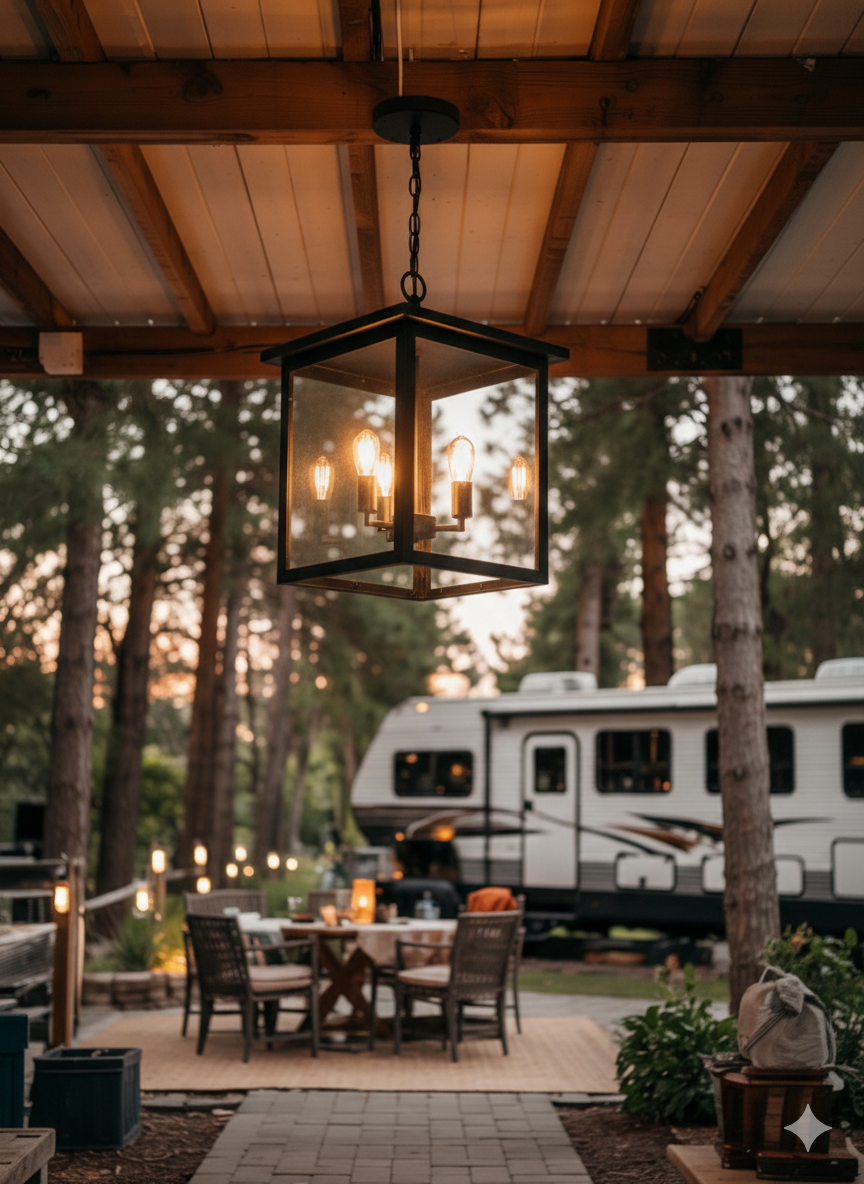
Why Dark Outdoor Spaces Are So Much Harder to Light
If you’ve never dealt with a heavily shaded property, you might not realize how different it is from those bright suburban backyard photos you see online.
When you’re surrounded by tall trees — ours are well over 100 feet — light just disappears. There’s no reflection from neighboring homes. No street glow. No bounce from bright siding. Once the sun sets, everything blends together.
Lighting a dark backyard is very different from lighting an open lawn.
In wooded areas especially:
- Trees absorb light.
- Shadows are deeper.
- Cool-toned bulbs look harsher.
- And one single porch light is never enough.
That’s why learning how to light a dark outdoor space isn’t about brightness.
It’s about layers.
In small outdoor spaces and heavily shaded properties, you need:
- Backyard perimeter lighting so edges don’t vanish.
- Overhead patio lighting to define the gathering area.
- Lower, softer lighting for ambiance.
- And warmth to balance it all.
Without layers, the space either feels unsafe… or it feels like a parking lot.
We didn’t want either.
🛍 Shop the Outdoor Lighting We’re Using
I’ve curated the exact solar fence lights, warm outdoor bulbs, cordless patio lamps, and string lights we’re considering (and using) inside my Amazon storefront. It’s easier to see everything in one place rather than hunting product by product.
You can browse it here:
[My Amazon Storefront ]
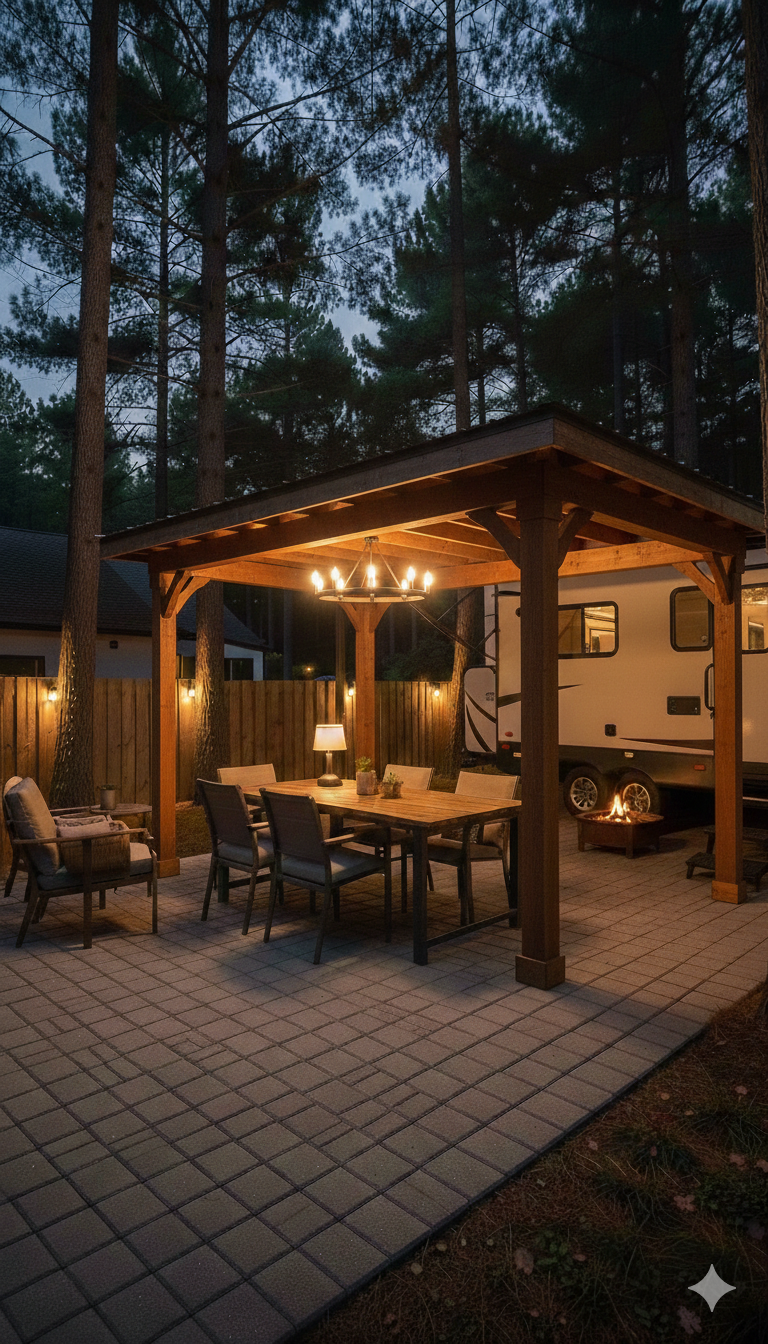
Step 1: Fix the Perimeter First (Fence, Entry & Shed Lighting)
Before worrying about decor, we addressed visibility.
When you’re doing a budget outdoor makeover, the smartest place to start is the perimeter. Defining the edges of your property immediately makes everything feel safer and more finished.
Because our fence needed replacing anyway, it became the perfect opportunity to incorporate lighting along it.
Solar fence lights are one of the easiest ways to create backyard perimeter lighting without wiring.
They:
- Don’t require electrical installation
- Are affordable
- Add subtle downward glow
- Help define walkways and boundaries
But here’s something important I learned quickly — warm light matters.
Cool white solar lights can feel harsh, especially in wooded areas. We’re leaning toward warm or soft amber tones so the space feels inviting instead of industrial.
We’re also planning lighting near:
- The entry gate
- The walking path to the patio
- The shed
When guests arrive, I want them to immediately feel oriented — not unsure where to step.
If you’re wondering how to light a backyard without wiring, start at the perimeter. Once the edges are visible, the entire property feels more secure and intentional.
And we’re just getting started.
Step 2: Add Overhead Warmth (And Make It Personal)
Once the perimeter is defined, overhead lighting is what truly anchors the space.
Covered patio lighting ideas often get overlooked in budget transformations, but overhead warmth makes a bigger difference than most people realize.
It defines the “room.”
Even outside, your brain reads overhead light as structure. It tells you, this is where we gather.
Instead of installing something overly bright or industrial, we’re focusing on soft, warm-toned lighting above the main table area.
Originally, I considered a simple weather-rated outdoor chandelier with warm LED bulbs. But then I realized something.
We’re surrounded by trees.
We’re constantly clearing fallen branches.
So why not use one?
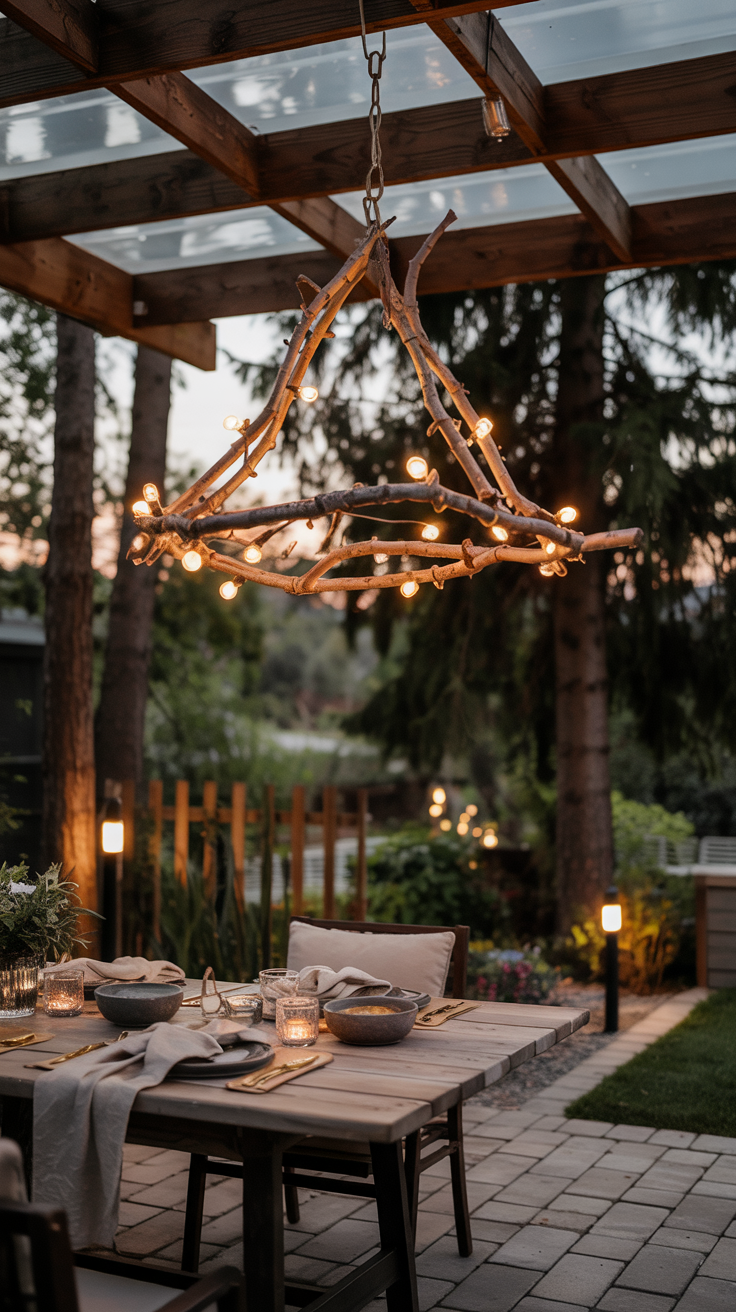
This season, we’re creating a DIY branch chandelier.
The plan is simple and intentional.
We’ll suspend a sturdy branch horizontally above the patio table and wrap it with warm string lights. Nothing overly complicated. Nothing overly styled. Just a natural branch with a soft glow.
It will hang from removable hooks so we can take it down and store it during winter. I want it practical — not permanent.
What I love about this idea is that it:
- Uses materials already on the property
- Adds texture and warmth
- Blends beautifully with the wooded surroundings
- Feels creative without feeling chaotic
In a dark outdoor space, overhead lighting is essential.
Making it personal makes it even better.
For anyone looking for rustic outdoor lighting ideas on a budget, incorporating natural elements can create a feature that feels custom — without a custom price tag.
If you’d rather not DIY a branch fixture, a simple weather-rated outdoor chandelier like this one works beautifully.
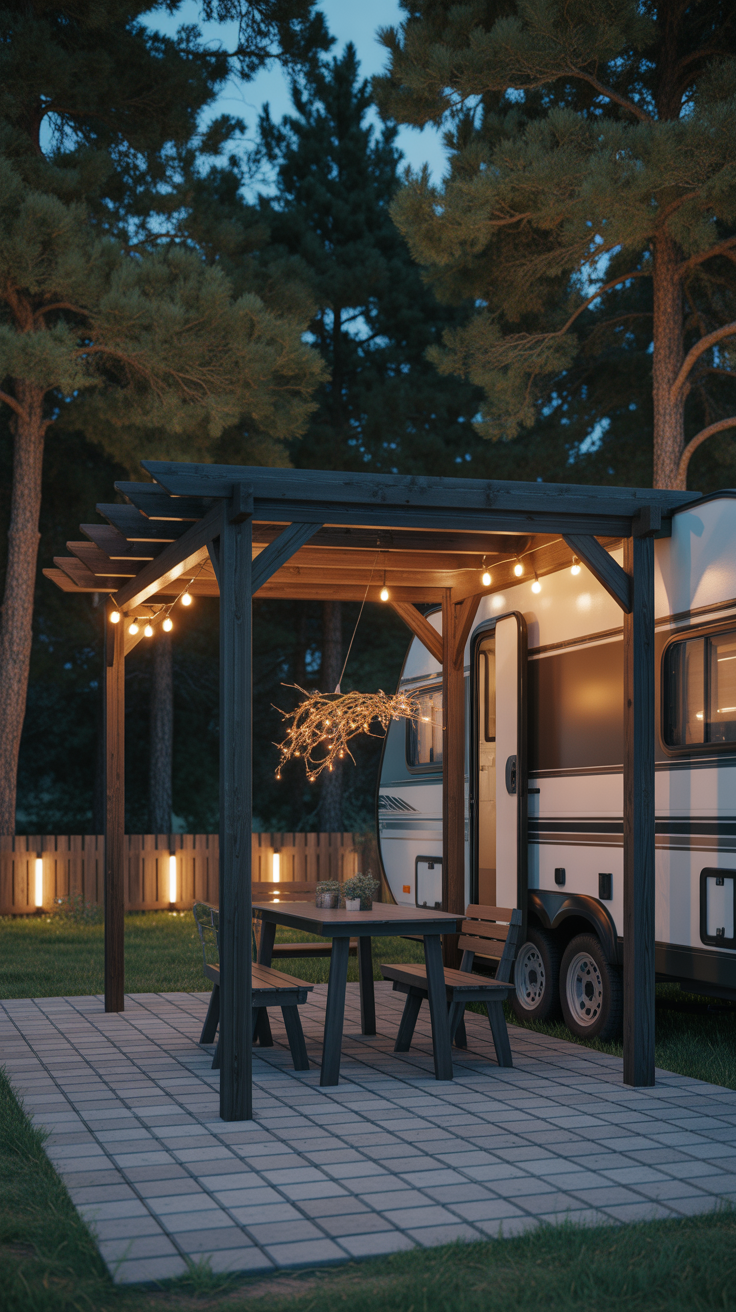
Step 3: Layer With Surface & Cordless Lighting
Once the structure is in place, smaller light sources create depth.
Small patio lighting ideas are often about creating “pockets” instead of flooding the entire space with brightness.
We use — and plan to continue adding — rechargeable cordless table lamps and lanterns around seating areas.
Cordless patio lighting works beautifully in darker backyards because:
- It doesn’t require wiring
- It’s flexible and movable
- It allows you to adjust lighting depending on guests
- It’s easy to store during harsh winter months
Placing rechargeable lamps:
- On side tables
- Near planters
- In seating corners
Creates zones of warmth.
Instead of trying to eliminate darkness entirely, we guide the eye to the areas that matter.
And this is where cozy really starts to show up.
If you want more ideas for cordless lighting inside and out, I shared more options here.
Let Firelight Do Its Job
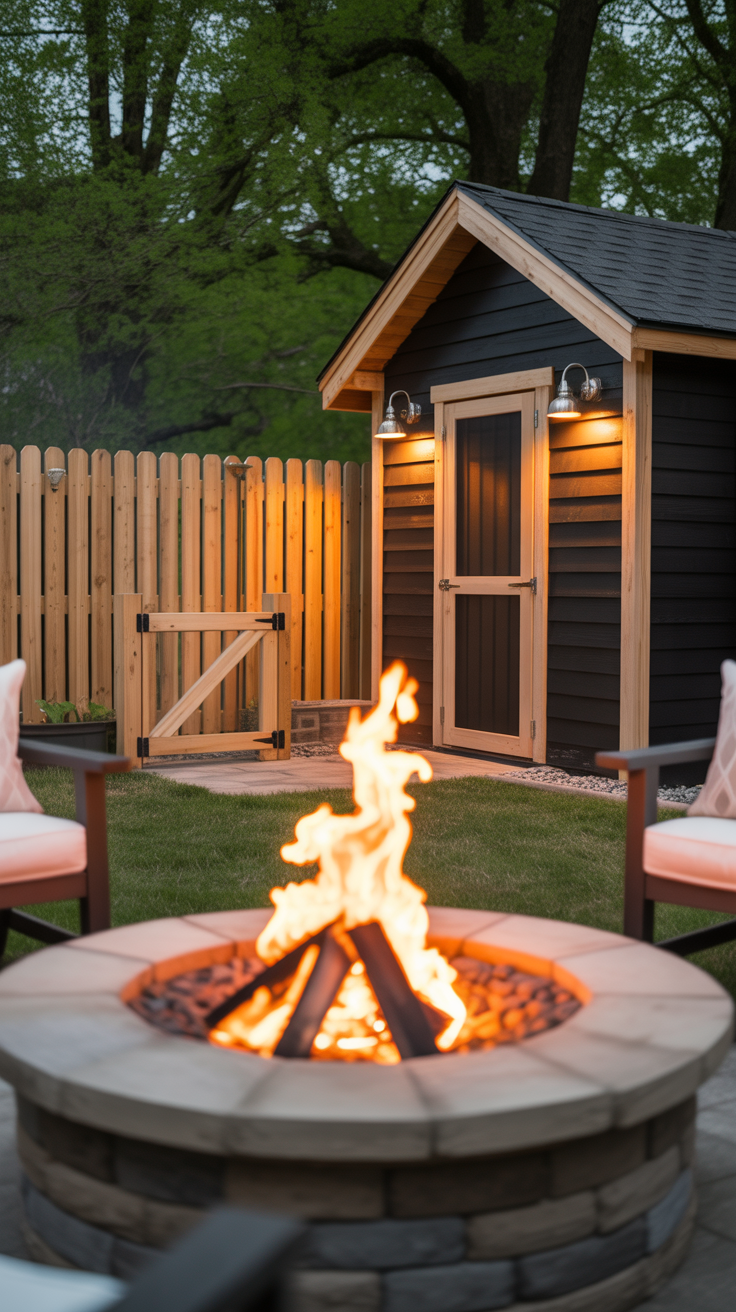
One of my favorite parts of being at the ranch is the wood-burning fire.
There is something about real firelight that no LED bulb can replicate.
And here’s something I’ve realized:
You don’t need to eliminate darkness completely.
In fact, a little darkness beyond the fence line makes the lit areas feel even warmer.
We’re not trying to create a sports field.
We’re trying to create:
- Visible pathways
- A welcoming seating area
- A focal point around the fire
When lighting is layered properly, the fire becomes part of the design — not the only source of visibility.
Budget Strategy: Where We’re Saving (And Where We’re Not)
Because we’re also upgrading:
- The fence
- Paint
- Pavers
- Planters
We had to be realistic.
This is a budget outdoor transformation, not a full luxury landscape install.
Here’s how we’re approaching it.
We’re saving on:
- Solar fence lighting instead of hardwired systems
- Rechargeable patio lamps instead of electrical installs
- Phasing the project over time instead of doing everything at once
We’re investing in:
- Weather-rated outdoor fixtures
- Warm-toned bulbs that won’t look outdated
- Durable finishes that can withstand trees, wind, and real weather
With tall trees overhead and seasonal conditions to consider, durability matters more than trend.
You don’t need a massive landscape lighting budget to transform a dark backyard.
You need intention and layering.
Affordable Outdoor Lighting Pieces That Hold Up
Then:
- Solar fence lights
- Cordless lamp
- Outdoor string lights
- Outdoor extension cord (weather rated)
Next, I’ll be sharing our full perimeter lighting breakdown — including the exact solar fence lights we chose and how we spaced them.
If you prefer to see all the outdoor lighting pieces mentioned in this post in one organized list, they’re all saved inside my Amazon storefront here.
What’s Next: Paint, Pavers & Finishing Touches
Lighting is the foundation.
Once that’s in place, we’ll move into:
- Fresh paint on the patio structure
- Updated fence design
- Pavers to define walkways
- Planters to soften the space
Lighting comes first because it changes how everything else feels at night.
But the transformation doesn’t stop there.
And I’ll be sharing that process as we go.
Final Thoughts: Cozy Over Bright
When you’re working with a dark outdoor space, it’s tempting to overcompensate.
More lights.
Brighter bulbs.
Flood everything.
But we’ve learned that a cozy backyard isn’t about eliminating darkness.
It’s about guiding it.
By focusing on:
- Backyard perimeter lighting
- Overhead patio warmth
- Layered cordless lighting
- Natural firelight
- And one creative DIY feature
We’re transforming our dark ranch property in a way that feels intentional and affordable.
If you have a wooded property, a small patio, or a backyard that disappears at night, start simple.
Define the edges.
Add warmth overhead.
Layer in soft glow.
Let the rest stay natural.
You don’t need perfection.
You need intention.
And maybe just a little whimsy.
We’re also applying the same layered lighting approach to our smaller patio at home.
As an Amazon Associate, I earn from qualifying purchases at no extra cost to you.
Leave a Reply