If you want to make and sell DIY bug spray at markets or from home, this guide walks through a beginner-friendly recipe, supply list, label ideas, packaging tips, booth display ideas, and simple pricing so you can create a product that looks polished and feels useful.
Let’s talk about a little summer lifesaver that flies off tables at local markets: DIY bug spray with beautiful labels. Not only is it a practical, natural product people genuinely want—but when you pair it with a gorgeous label, it instantly becomes giftable, market-ready, and majorly sellable.
This is one of those rare crafts that’s both functional and fabulous. Whether you’re a wellness junkie or just someone who’s tired of being mosquito bait, making and selling natural bug spray can be a smart, low-cost way to earn from home. Especially when you brand it right.
What I love about this idea is that it solves a real summer problem, looks boutique when it’s packaged well, and has the kind of low material cost that gives you room for profit.
Let’s break it down, step-by-step—from creating the product to selling it like a pro.
👉 Summer crafts you can make and sell (https://sharmedlife.com/20-summer-crafts-you-can-make-and-sell-at-this-years-market/)
- “If you love this, you might also like my sugar scrubs DIY”
- “This pairs perfectly with my tiny retreat backyard setup”
- “You can also check out my summer DIY ideas”
Why DIY Bug Spray Is a Summer Craft Worth Selling
There’s a reason these sprays do well at markets:
- It solves a real problem (nobody likes bug bites)
- It’s all-natural and non-toxic—major selling point
- It’s practical, family-friendly, and useful for patios, camping trips, gardening, and summer markets.
- It’s consumable—so customers come back for more
- You can batch-make it easily and add beautiful packaging
Plus, the startup cost is low. Most ingredients come in bulk, and one bottle can retail for 4–5x what it costs to make.
Everything you need to make these market-ready bug sprays is listed below, including the bottles, ingredients, and label supplies that help them look polished and sellable.
Supplies You’ll Need to Make DIY Bug Spray
Here’s a list of everything you’ll need to whip up your own bug-repelling sprays. I’ve included Amazon links to save you some hunting.
I’ve collected all the supplies you can use right here to make it simple: Supplies To Make DIY Bug Spray
| Item | Purpose | Amazon Link |
|---|---|---|
| Amber glass spray bottles (2oz or 4oz) | Keeps oils stable & looks professional | Buy amber spray bottles |
| Witch hazel (alcohol-free) | Main base for your spray | Buy witch hazel |
| Distilled water | Dilutes the mixture safely | Buy distilled water |
| Essential oils (lavender, citronella, eucalyptus, peppermint) | Natural bug repellents | Buy essential oil set |
| Small funnel or dropper | Makes pouring easier | Buy small funnels |
| Labels (waterproof or printable) | For branding your bottles | Buy printable waterproof labels |
| Sticker paper or Avery label template | If you’re designing your own | Buy Avery label sheets |
Simple DIY Bug Spray Recipe (That Works)
You can experiment with blends, but here’s a solid beginner formula for one 4oz bottle:
- 2 oz witch hazel
- 2 oz distilled water
- 10 drops citronella oil
- 10 drops eucalyptus oil
- 5 drops peppermint oil
- 5 drops lavender oil
Directions:
- Add all oils to the bottle first.
- Pour in witch hazel, then distilled water.
- Shake gently before each use.
Optional: Add a sprig of dried lavender or rosemary for a fancy, natural touch.
Because natural sprays are typically milder than conventional repellents, remind customers to shake before use and reapply as needed, especially outdoors.
Important Safety Note Before You Sell
This recipe is intended as a simple small-batch DIY project. If you plan to sell a body spray or water-based product, make sure you understand local labeling rules, shelf stability, ingredient safety, and preservative requirements before offering it for sale.
You may also love
If you’re looking for more beginner-friendly products to make and sell, these ideas are worth checking out next:
- 20 Summer Crafts You Can Make and Sell at This Year’s Market
- How To DIY High End Vases
- Easy DIY Tassels For Your Purse (so fun and popular)
Labeling & Branding Tips That Boost Sales
Let’s be real: people buy with their eyes first. A well-designed label turns a basic spray into a boutique product.
What to include on the label:
- Product name (ex: “Summer Shield Natural Bug Spray”)
- Key ingredients
- Directions (“Shake well before use”)
- Caution (“For external use only”)
- Your brand name/logo
Bonus Tip:
Use soft, earthy color palettes and handwritten fonts to appeal to eco-conscious shoppers. Canva is a great free tool for making professional-looking labels.
Waterproof labels are a must—no one wants ink running when they toss this in a beach bag.
How to Make Your Bug Spray Stand Out at Markets
You’re not just selling bug spray—you’re selling peace of mind, naturally. Here’s how to differentiate your product:
1. Create Seasonal or Themed Lines
Try a “Kids Safe” version with milder oils, or a “Camping Essential” with stronger blends.
2. Offer Multipacks or Bundle Deals
Ex: 1 for $8 or 3 for $20. Include small bottles people can keep in bags or cars.
3. Pair with Other Summer Wellness Products
Think cooling face mists, lip balms, or after-bite sticks. More ways to increase your average sale.
4. Add Freebies or Upsell Tags
Tie a mini info tag with raffia that says “Handmade in [Your Town]” or “Refillable Bottle.” Small touches = big trust.
If you love practical crafts that can actually turn into extra income, you might also enjoy my post on 20 summer crafts you can make and sell at this year’s market.
Link 👉 https://sharmedlife.com/20-summer-crafts-you-can-make-and-sell-at-this-years-market/
Displaying Your Bug Spray for Maximum Impact
Visual merchandising matters—especially for small bottles. Here are some booth-friendly ideas:
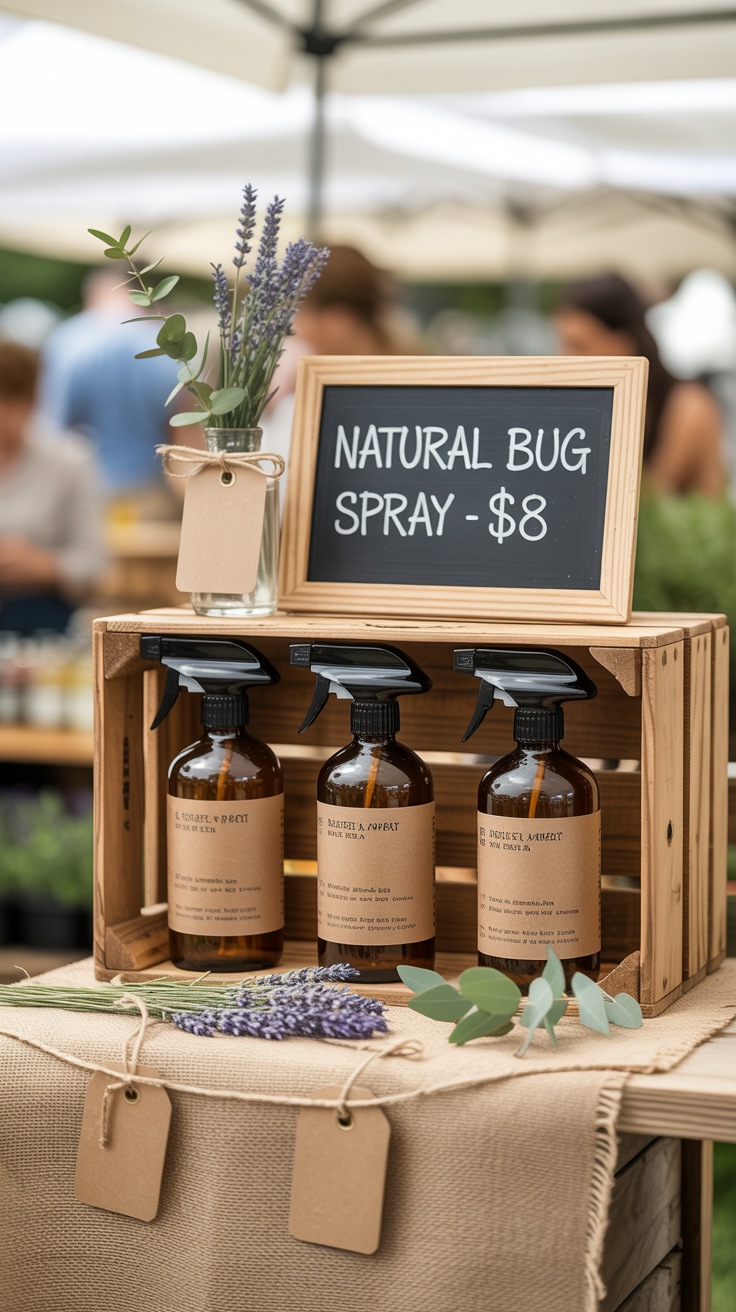
- Use wooden crates to add height
- Display bottles in vintage trays or baskets
- Include a chalkboard sign: “Natural Bug Spray – $8 Each or 3 for $20”
- Keep a tester bottle available (with a clean cloth for wiping)
- Add faux greenery or dried herbs to match the aesthetic
Cost Breakdown & Pricing for Profit
Let’s keep it real: your margins matter. Here’s a quick cost breakdown for one 4oz bottle:
| Item | Approx. Cost per Bottle |
| Bottle | $1.00 |
| Essential oils | $0.90 |
| Witch hazel + water | $0.30 |
| Label & packaging | $0.40 |
| Total Cost | $2.60 |
Retail Price: $8–$10 each, depending on your audience. That’s a solid profit with room to scale.
If you’re selling at a market, test a simple bundle first. A single bottle is an easy impulse buy, but a small discount on two or three bottles can raise your average sale quickly. You could also create a mini summer set with bug spray, an after-bite roller, or a cooling mist for an even more giftable display.
Should You Sell Online Too?
Yes—and here’s why: Bug spray is a consumable. That means repeat customers.
Selling Platforms to Consider:
| Platform | Pros | Cons |
| Etsy | Built-in traffic, handmade-friendly | Fees, competition |
| Shopify | Full control | Monthly cost, setup time |
| Great for local orders | Takes time to grow | |
| Local Facebook Groups | Zero fees, fast sales | No long-term scaling |
Pro Tip: Start local, then expand online with repeat buyers or custom requests.
👉 More handmade products you can sell from home (https://sharmedlife.com/how-to-diy-your-own-braided-denim-rug/)
Packaging That Feels Boutique Without the Cost
Make your bug spray feel giftable by packaging smart:
- Kraft paper bags with a window
- Small boxes with crinkle filler for gift sets
- Raffia ribbon with a tag that tells your story
A little rustic charm goes a long way in building perceived value.
DIY Bug Spray FAQ
Can I sell homemade bug spray at markets?
In many cases, yes, but it’s smart to check your local market rules and labeling requirements first.
What makes DIY bug spray look more professional?
Amber bottles, waterproof labels, clean branding, and a simple display setup can make a big difference.
How much profit can you make on DIY bug spray?
That depends on your materials and pricing, but even small handmade items can have healthy margins when you buy supplies in batches.
Does homemade bug spray need a preservative?
If it contains water-based ingredients and will be stored for a while, shelf stability matters. Small fresh batches are best for personal DIY use, but products sold to others may need proper preservation and testing.
Can I sell DIY bug spray at markets?
You can, but rules vary by location. Check labeling, ingredient, cosmetic, and handmade product regulations where you live before selling.
What type of bottle works best?
Amber spray bottles are a popular option because they look polished and help protect light-sensitive ingredients.
Final Thoughts: Big Potential in a Tiny Bottle
Selling homemade bug spray might not sound glamorous—but it’s practical, low-cost, and in demand. Plus, once you nail your label game, it’s downright adorable on a display table.
If you’re looking for a way to start (or grow) a handmade business from home this summer, this is a perfect low-barrier product to test the waters with. People are actively looking for natural alternatives, and this product meets the moment.
Just start with one batch, test at a local market or share on social, and watch what happens.
➕ Want More Ideas Like This?
This is one of those small handmade products that feels easy to start with, but still has real earning potential when the packaging and display are done well.
Don’t miss my full list of 20 Summer Crafts You Can Make and Sell at This Year’s Market. It’s packed with beginner-friendly, sellable ideas to help you build income from home without needing a big setup.
And if you make this spray—tag me! I love seeing what you create. 🌿
As an Amazon Affiliate, I earn from qualifying purchases at no extra cost to you
Just curious if this product would need a preservative to prevent molding and to make it last longer. I’m new to this so thanks for any advice.
That’s a great question, and I’m glad you asked 😊
This DIY bug spray recipe is intended as a fresh, small-batch spray and does not include a preservative. Because it contains water-based ingredients, it’s best made in small quantities and used within a short period of time.
If you plan to make this for personal use, I recommend using distilled water, clean bottles, and storing the spray in a cool place. For extra freshness, it can also be kept in the fridge.
If someone were planning to sell a product like this at markets or in larger quantities, a proper preservative and additional safety testing would be important to ensure shelf stability and product safety over time.
This recipe is shared for DIY and educational purposes, and anyone selling a body product should always check their local regulations and safety requirements.
Thanks again for the thoughtful question — it’s an important one!
Amazon links don’t work.
thank you!… the links have been fixed!
What kind of preservative would you suggest for larger quantities?
If someone plans to sell a water-based spray, they need a broad-spectrum preservative approved for cosmetic use.
Common cosmetic preservatives used by small-batch makers:
Liquid Germall Plus
Optiphen Plus
Geogard ECT (Preservative ECO)
Leucidal Complete (more natural-leaning but less robust)
Important notes:
Each preservative has a required usage rate (usually 0.5–1%)
Some require a specific pH range
Some don’t work well in high-alcohol formulas
If the spray is high-alcohol (70%+ ethanol), that can act as a preservative system — but then you’re entering flammable product territory and different labeling rules.
Are you AI? Your photos look fake and your responses seem AI generated.
Thanks for your question! I use a mix of tools—including AI—for visual inspiration and to help bring ideas to life more creatively. The content, ideas, and recommendations on this site are thoughtfully put together to help readers find practical, beautiful solutions for their homes and lifestyle.